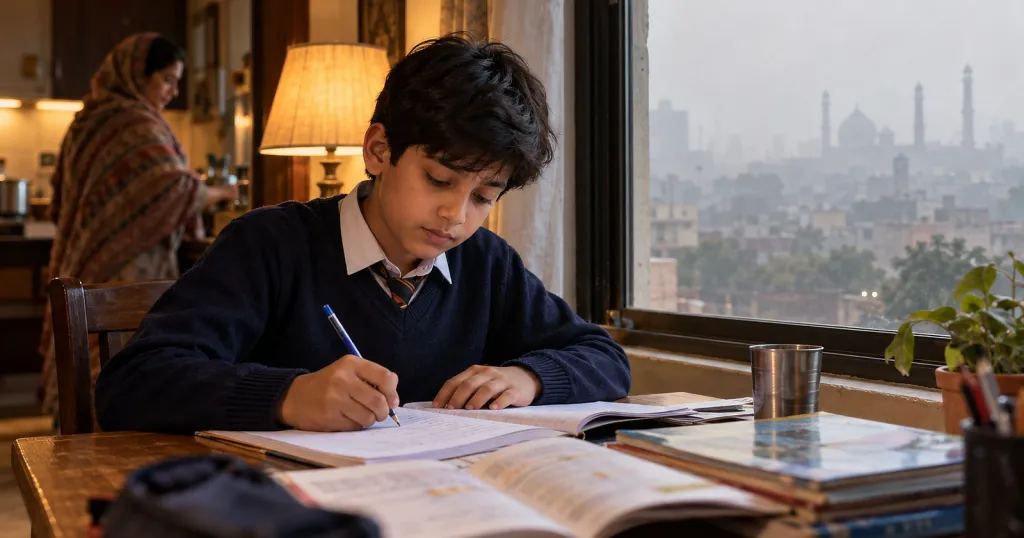

What to say when your child is stressed before exams, the sentences that backfire, how to handle results day, and the signs that mean it is time to get help.
Exam season changes a house. The television goes quiet, relatives start asking about the date sheet, and a child who used to chatter all through dinner now eats in silence and goes straight back to the books.
Some nerves before an exam are normal, and they can even be put to good use. You can’t take all the pressure away, and you don’t need to. What you can do is notice when the weight is getting too heavy, and make sure your words make it lighter.
Signs your child is carrying too much
Look for changes from your child’s usual self, especially if several appear together and last more than a few days:
- constant worry, or going over the same question again and again;
- headaches or stomach aches, often on the morning of a test;
- trouble falling asleep, or waking very early;
- snapping at brothers and sisters over nothing;
- eating much less, or much more, than usual;
- losing interest in things they normally enjoy, like cricket with friends or a favourite programme;
- low mood, or saying things like “there’s no point” or “my future is finished”.
What helps
Listen first
When your child says “I’m going to fail”, the urge is to argue: “No you won’t, you’re very intelligent.” Wait. Ask what is worrying them most, and let them finish. “Which paper feels worst?” and “Which part of it?” are better first questions than any advice. Often, just being heard shrinks the worry to a size you can tackle together.
A routine the whole house keeps
Fixed times for meals, study, breaks and bed make the day predictable, and that is calming in itself. The rest of the family can help: the television lower in the shared room, guests kept short the night before a paper, younger siblings given something to do elsewhere.
Sleep
Teenagers need 8 to 10 hours of sleep a night, and children aged 6 to 12 need 9 to 12. Staying up all night before a paper is usually a bad idea. Half an hour of winding down before bed, away from the phone, makes sleep come more easily.
Food and water
Regular meals and a proper breakfast on exam mornings help a child feel steady. Go easy on sugary snacks and caffeine: one cup of chai is fine; five cups and an energy drink at midnight are not.
Short breaks and movement
A ten-minute walk on the roof, a few overs in the street or helping to lay the dastarkhwan is not wasted time. Exercise can help clear the mind and relieve stress.
Sentences that backfire, and better ones
| Instead of | Try |
|---|---|
| “Ahmed’s son got 1,050.” | “I only want to see your best. This isn’t a race with anyone.” |
| “Just don’t think about it.” | “It makes sense that you’re worried. Shall we plan tomorrow together?” |
| “Your whole future depends on this paper.” | “This paper matters. Whatever happens, we will work out the next step together.” |
| “What will people say?” | “We are proud of how hard you are working.” |
| “Don’t worry, you’ll definitely get an A+.” | “You have prepared. Take it one question at a time.” |
| “At your age, I studied by lantern light.” | “What would help you most this week?” |
The sentences in the first column compare, dismiss or raise the stakes. The ones in the second tell your child you are on their side.
Results day
- Decide beforehand how the result will be checked: together, or your child first on their own. Ask which they prefer.
- Your first reaction is the one they will remember. Before you say anything about marks, ask, “How do you feel?”
- Hold off the phone calls. Relatives will call. They always call. You can ring them back in the evening.
- Don’t post the result in the family WhatsApp group without asking your child, whether it is good or disappointing.
- If it is disappointing, make no big decisions that day. The following week, look calmly at the options, such as rechecking, a supplementary exam or a different plan for next year, and check your board’s own notice for the rules and dates.
- If it is excellent, praise the effort behind it, and be gentle with a brother or sister whose result was lower.
When to get professional help
Exam stress usually eases once the papers are over. Speak to your family doctor, the school counsellor or a psychologist if your child’s low mood or worry is severe, lasts for weeks, or gets in the way of everyday life: they stop eating properly, can’t sleep most nights, pull away from everyone, or talk about feeling hopeless. Seeing a counsellor doesn’t mean something is “wrong” with your child, any more than seeing a doctor for a fever does.
If your child talks about not wanting to live, or about harming themselves, take it seriously and act the same day. It is all right to ask gently and directly whether they have had such thoughts; studies show that asking does not make them more likely. Stay with your child and get help:
- in an emergency, call 1122 or go to the nearest hospital emergency department;
- in Punjab, the Safe Cities helpline offers free counselling: call 15 and press 7 for a psychologist;
- Rozan’s counselling helpline, 0304-111-1741, is open Monday to Friday, 9 am to 5 pm.
For tonight, try one thing. Sit with your child for ten minutes, without the books and without advice, and ask, “What’s the hardest part right now?” Then just listen.
If most of the worry comes from one subject, a patient teacher for that subject can take some of the weight off. You can find a teacher in five taps.
Sources
- NHS: Help your child beat exam stress
- American Academy of Sleep Medicine: Pediatric sleep recommendations (2016)
- National Institute of Mental Health: 5 action steps to help someone having thoughts of suicide
- APP: PSCA helpline 15 offers free mental health counselling (23 Apr 2026)
- Rozan: Counselling services and helpline hours
- Find A Helpline: Pakistan (emergency services and helplines)